
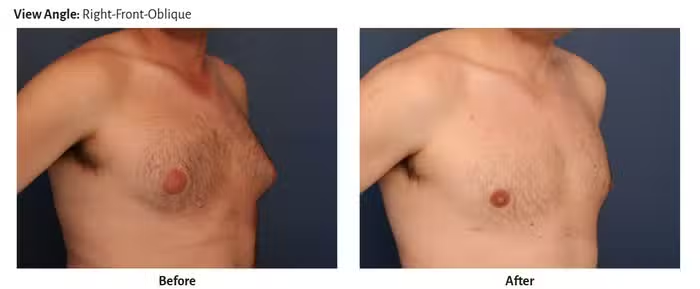
Dr. Ronald Schuster, a board-certified plastic surgeon with decades of experience, understands how common this is and how often the cause is true gynecomastia. At his practice in Baltimore, Maryland, he can help address this issue with male breast reduction surgery.
What Weight Loss Can Reveal About Your Chest
Gynecomastia is the presence of glandular breast tissue in men. It’s not just fat, and it doesn’t respond to diet or exercise the way other parts of your body do. In fact, losing weight can sometimes make it more noticeable. As the fat around the chest decreases, the remaining glandular tissue stands out more. That’s why some men are surprised to see their chest shape change very little, even after significant weight loss.
It’s also common to be left with stretched or sagging skin, especially after major weight changes. This can make your chest look soft and poorly contoured, despite your progress.
Why Some Men Still Need Surgery After Losing Weight
True gynecomastia doesn’t go away on its own. It can develop during puberty or later in life, and for many men, it sticks around no matter how healthy their lifestyle is. Once weight loss has revealed what’s really under the surface, surgical correction and gland removal become the most effective treatments.
Dr. Ronald Schuster specializes in male breast reduction. His approach combines ultrasonic-assisted liposuction, direct excision of dense glandular tissue, and, when needed, carefully planned skin removal. He often performs the entire procedure through a small lateral incision (his signature Lateral Pull Through technique) to avoid visible scarring on the chest.
When Lifestyle Isn’t Enough, There’s Still a Solution
No matter how long you’ve lived with chest fullness, it can be fixed. With a thoughtful approach and years of experience, Dr. Schuster will do everything he can to help restore your confidence.
Call 410-902-9800 to schedule a private consultation in our Baltimore practice, and let’s discuss what’s possible after weight loss.
